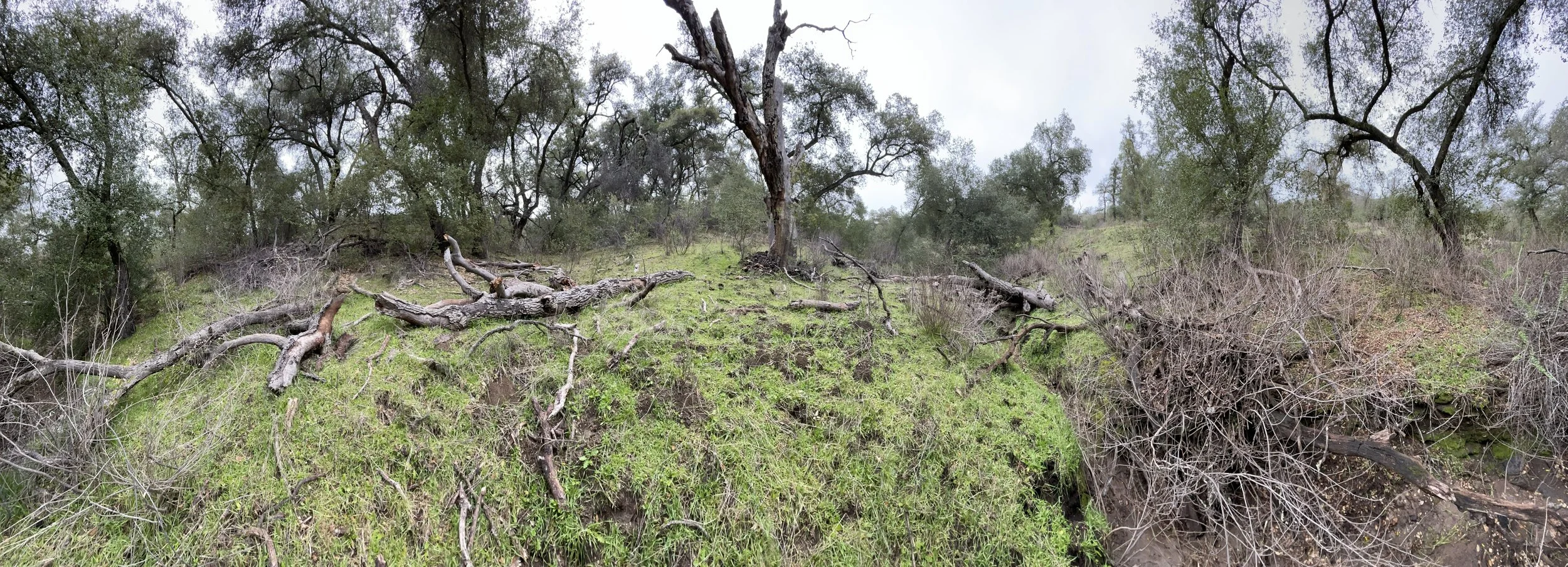
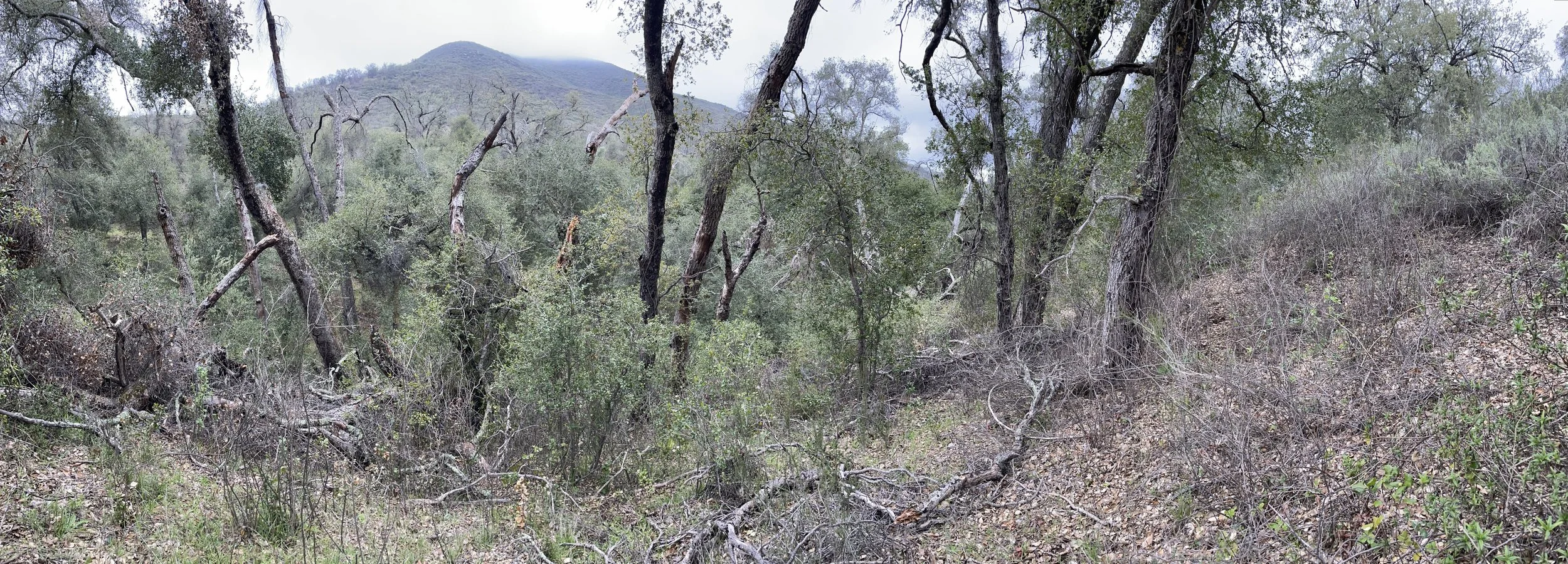
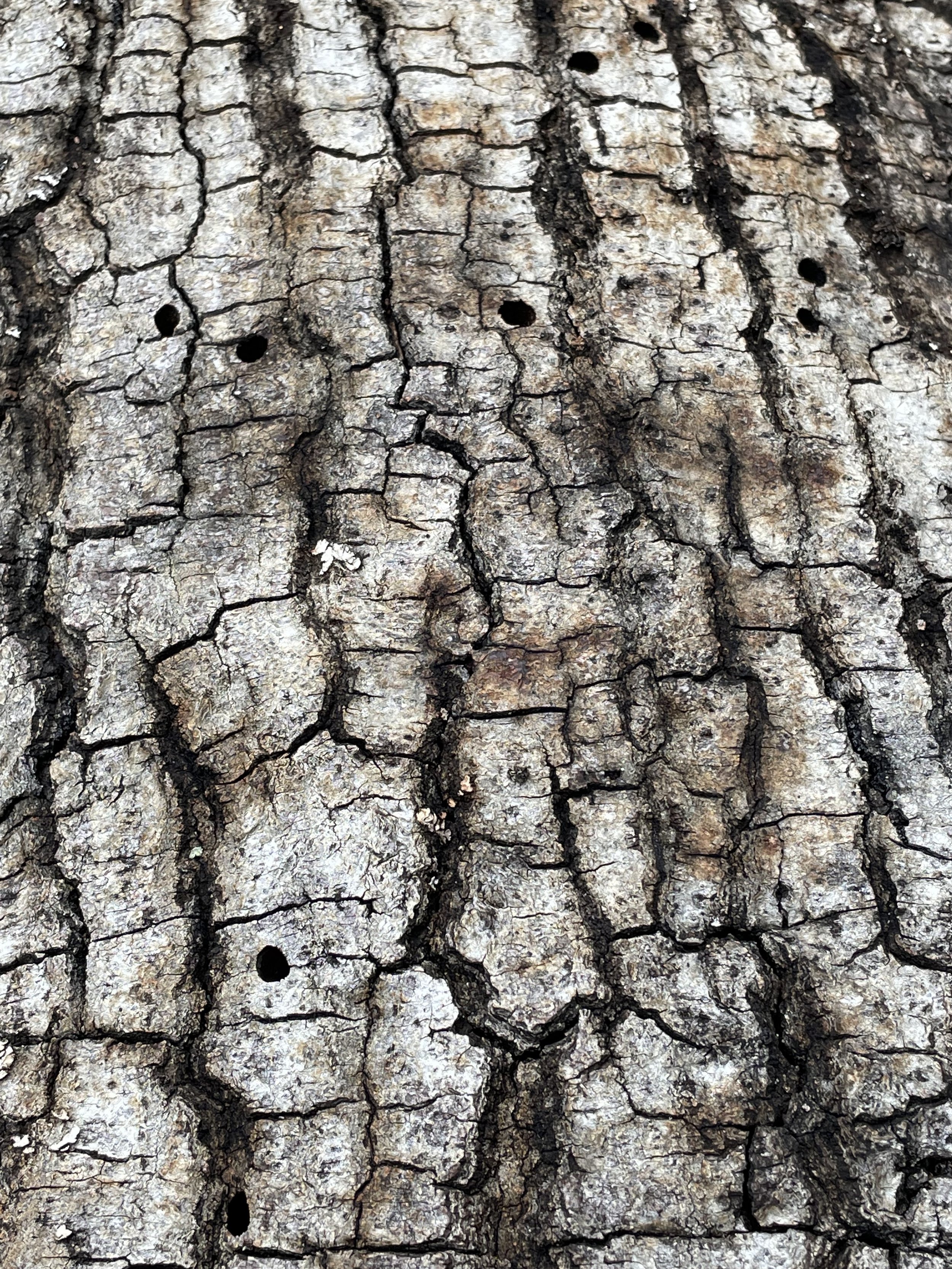
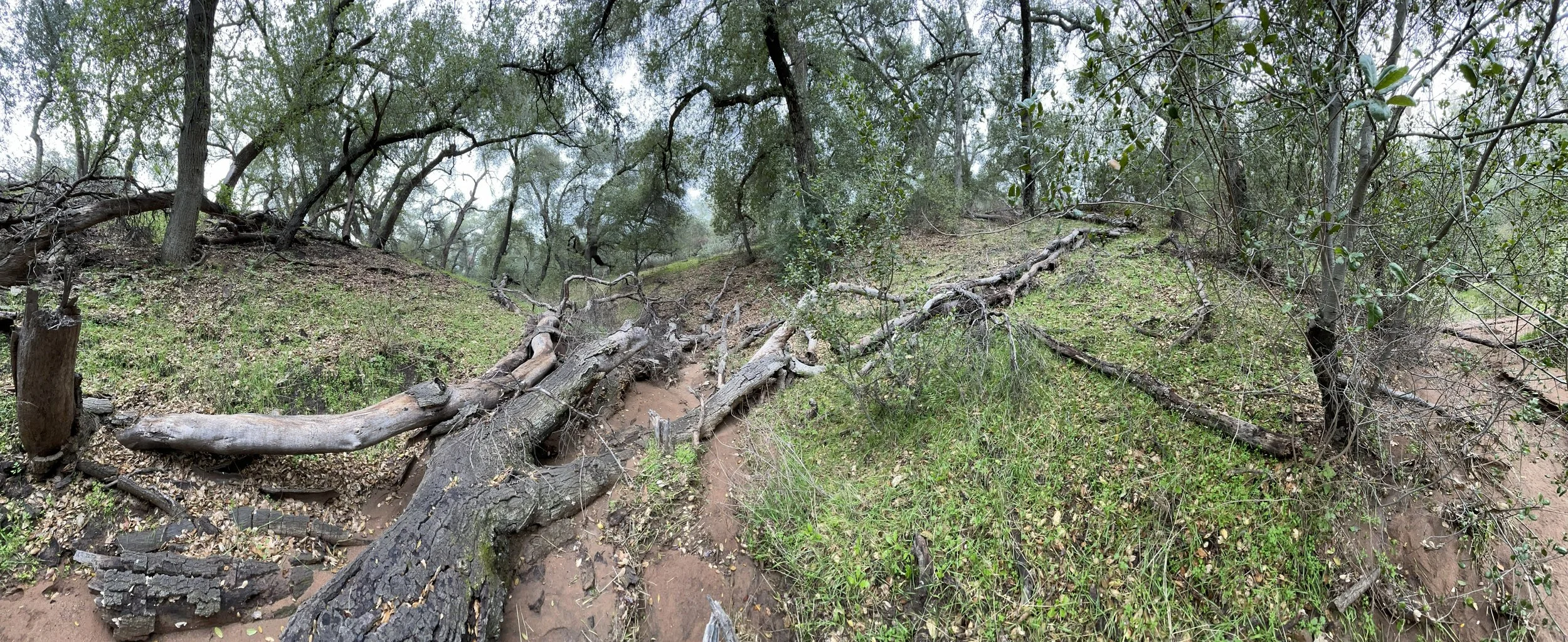
The riparian corridor at the Encino Conservancy Ranch supports a mature Southern Coast Live Oak forest that plays a critical role in watershed health, wildlife habitat, and wildfire resilience. Over the past decade, this corridor has been severely impacted by Gold Spotted Oak Borer (GSOB), an invasive pest that has caused widespread oak mortality and left behind dense accumulations of dead wood and ladder fuels. (January 2023 Oak Survey)
These conditions have reduced the forest’s ability to withstand wildfire and drought. Without intervention, the next fire in this corridor could result in stand‑replacing loss of the riparian forest, permanently altering the watershed and the ecological functions it supports.
Our riparian resiliency work focuses on carefully restoring forest structure and function rather than wholesale removal. Planned efforts include the selective removal of dead and hazardous oak material, reduction of ladder fuels, and targeted control of invasive species such as escaped olive and Armenian blackberry that compete with native riparian vegetation.
In addition to vegetation management, we are working to improve shallow groundwater hydrology that supports riparian tree health. This includes process‑based restoration techniques—such as installing small, nature‑inspired structures in upland swales—to slow runoff, retain water on the land, and increase groundwater recharge during storm events.
Together, these actions are intended to increase wildfire resilience, support recovery of native riparian species, and protect the long‑term integrity of the watershed, while maintaining habitat for wildlife that depend on this corridor.